


THANK YOU FOR SUBSCRIBING
Weekly Brief
Be first to read the latest tech news, Industry Leader's Insights, and CIO interviews of medium and large enterprises exclusively from Healthcare Tech Outlook
A featured contribution from Leadership Perspectives: a curated forum reserved for leaders nominated by our subscribers and vetted by our Healthcare Tech Outlook Advisory Board.

West Tennessee Healthcare
Driving Safety & Innovation in Healthcare
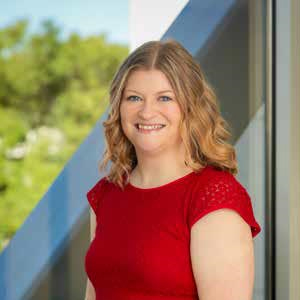
Heather Morris
Heather Morris is the System Director of Clinical Risk Management at West Tennessee Healthcare, dedicated to enhancing patient safety and supporting frontline staff. A registered nurse with a background in pediatrics and peri-procedural care, she transitioned into risk management in 2015 and became Director of Risk in 2020 at the height of the COVID-19 pandemic. Heather holds an RN from Jackson State Community College and a bachelor’s in business management from the University of Tennessee at Martin, with plans to pursue a master’s degree.
Through this article, Morris shares their transition from bedside nursing to clinical risk management leadership, emphasizing strategies for fostering a safety culture, leveraging AI, and enhancing collaboration to improve patient outcomes.
The Journey into Clinical Risk Management
I began as a registered nurse in pediatrics, newborn nursery, and peri-procedural. I always knew that I wanted to be able to make a difference for patients and healthcare workers but in a more behind-the-scenes role. I returned to school and obtained my bachelor’s in business management. Before graduation, I noticed an opening in Risk Management and was selected as an Assistant Risk Manager as my healthcare and business degrees positioned me well to learn and excel in this type of role. Through personnel changes and unexpected opportunities, I was allowed to prove myself as a leader at the start of COVID-19 and was promoted to System Director of Risk Management and now System Director of Clinical Risk Management which allows me to achieve that original goal of helping patients and front-line healthcare providers.
Building a Culture Where Safety Comes First
I started by identifying where our gaps were in our safety culture through event reviews, speaking with frontline staff about common safety concerns, and learning from the other leaders what their safety barriers were. I would then take these concerns to our organizational leaders to see what actions could be taken and start improvement efforts.
We brought in a new event reporting system to make it easier for staff to report and leaders to review events and frequently promote the new system across the organization. This was a huge game changer for us regarding staff communicating issues regularly as well as providing an efficient and secure way for leaders to problem-solve together. My Risk team drives the improvements through this system by asking the “why” questions to get leaders to dig as deep as possible for process solutions.
“Always be approachable and ready to listen. You learn more about what is truly going on within your organization if you choose to listen openly before speaking. Then you can try to fix the real issues at hand.”
RCAs and FMEAs were made more standardized and an environment where staff felt safe to come and speak openly was cultivated by making it a conversational type meeting as opposed to an intense questioning and answering type session. Questions are still asked during the conversation to make sure no stone goes unturned but it’s in a way where everyone gets to share their insight. We also include all staff involved so each employee can hear the other’s side of the story and learn from each other and where all of the breakdowns in the process are.
Lessons from Pediatrics & Outpatient Care
I was a pediatric/Newborn Nursery nurse in a very small not-forprofit hospital right out of nursing school. I was the only nurse on the unit with a PCT the on night shift. I had to learn fast and to trust my gut if something didn’t feel right. I learned who my resources were and worked through the difficult situations. This experience taught me resilience, that I can learn to navigate new situations even when it’s hard, and to take each day as an opportunity to learn something new. This experience made me a stronger person because I had to figure things out quickly and on my own.
The outpatient setting provided me the opportunity to work and think quickly. The patients needed to be prepped and ready to go quickly while also ensuring they were safe to proceed to their procedure and recovered well post-procedure. This position was within my current organization, and I got to know many people I still work with today. I got to learn about how so many different departments work, and I still apply that knowledge today when it comes to issues that involve these areas.
Breaking Silos
When I have a collaborative meeting among different service lines or health professionals, I make sure they each have a chance to speak about their part of the process or event. By doing this, each person gets to briefly walk in that person’s shoes to realize we all have our version of hard and we are all just doing the best we can now to take care of our patients. They start to realize what they could have done differently or better to help the other person.
Why Smart Tech is the Next Big Thing in Risk Management
One of the emerging things I am most excited about is the use of AI in various aspects of care. There are options to use AI in video monitoring for fall prevention, data analysis, and so many others. When used safely, AI could assist with identifying trends to take a more proactive approach to care, assist an already busy workforce by making things more efficient, and analyze data even deeper to assist with process improvement efforts by identifying more trends.
Playbook for Future Risk Management Leaders
Always be approachable and ready to listen. You learn more about what is truly going on within your organization if you choose to listen openly before speaking. Then you can try to fix the real issues at hand.
Always work as a team with those involved in the issue, they have the most ownership and desire to fix whatever issues are at hand.
Keep your passion and drive going by remembering you can be a driving force behind bettering the care that you, your loved ones, and the community receive in your healthcare organization.
The articles from these contributors are based on their personal expertise and viewpoints, and do not necessarily reflect the opinions of their employers or affiliated organizations.
